


A sense of nervous excitement. Visible is the frosty air coming from my fellow runners as they do the "pre-race" wiggle on the starting line.
A swift twitch of the hips.
I'm lined up for my local weekly parkrun event and I'm serious. The countdown begins...
Oh, hang on. I must sort my device. So does the runner beside me.
The person in the line sighs. I'm not moving until… there! GPS ready, away I go.
During the scramble, it's difficult to find a person without a smartwatch on it. And this extends beyond us participants who wear them.
This is a explosive, massive industry. Brands like Samsung Galaxy dominate, each with an wide range of various devices to fit a range of budgets. Depending on how advanced the model you choose, price tags can start from a hundred pounds to a significant investment.
"It drives me insane, it's impossible to switch off."
"It provides solace… It's like a companion guiding me."
"I wish it wouldn't say I've had a restless night."
Just some of the responses people have shared from other smartwatch wearers when I inquire what they feel about theirs.
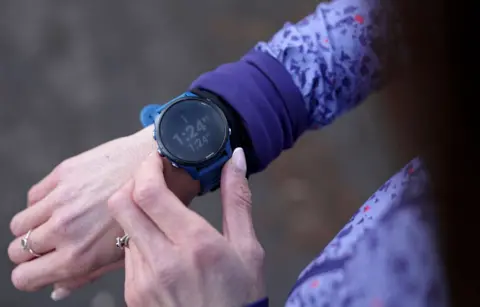
A Sea of Statistics
My thoughts on mine? Right now, frustrating. It's indicating my speed is wrong, making me wonder whether the trees along my route are blocking my satellite signal.
A vast number of us strap these small devices onto our arms and use them 24/7, seemingly at ease with the fact they're constantly monitoring us.
A distant memory are the days when we relied on them solely to give us an idea of our daily steps. Today, they can measure our sleep patterns, heart rate, glucose levels, our body battery.
It's tricky to find a bodily function they fail to monitor.
But can they do what they claim to do? And are the data points we obsess over a true reflection of our actual health? Do they improve our mental and physical wellbeing, or do the avalanche of measurements and cheerleading alerts just increase our sense of overwhelm?

Addiction or Aid?
"I become a a little fixated with mine," one user confesses.
While she loves how her device monitors her runs, she finds some of its other features "overwhelming" at times - a feeling first discovered during a significant period.
Until she found out she could change its configuration, her smartwatch constantly alerted her she was not being active enough. Later on, the watch frequently reports her she's had a poor sleep score.
"I am caring for a young baby, I don't need to be informed my sleep was poor," she says. "That fact is all too clearly."
Couldn't she just take it off?
"It's possible, perhaps, but I've got this love-hate relationship with it," she continues. "I value it for its workout tracking, I sometimes question whether all the other things it can now do is maybe excessive for me."
How Do They Work?
Every device of smartwatch has its own novel way of monitoring your vitals and processing your data, but the most use sensors on the underside of the watch.
They usually project tiny, coloured LED lights onto your skin which can monitor blood flow, recording your BPM. Higher-end devices detect changes in the electrical current that passes over the skin to get an idea of your nervous system activity.
The Professional Viewpoint
A data scientist says that in general for smartwatches, it's a "fine balance" - while the ever-evolving tech could actually save lives, "identifying issues before we notice anything", it could also turn us watch wearers into the "concerned but fine".
He points out that some of the latest wearables can perform tests like electrocardiograms (ECGs), which regularly monitor how stable the heart is. They can alert if someone is experiencing a heart arrhythmia, where there is abnormal electrical activity in the heart causing an arrhythmia.
This does not automatically signal someone is on the verge of a cardiac event, but it can give an early warning they might be more susceptible of a blood clot in the future.
But how to interpret these figures is complex. The expert worries that as more functions are introduced, people may struggle to fully comprehend their data.
"I'm not entirely convinced that having the capacity to monitor so many metrics is such a beneficial thing," he says.
A clinical psychologist specialising in cardiology concurs. Research into the impact of wearable tech on a specific group of individuals with health issues suggested a minority of those who were given devices to monitor their condition experienced heightened worry and were "had a higher tendency to use medical services".
She noted a pattern with her patients - they spotted a worrying figure on their watch. They grew concerned. Their heart rate went up. They got more worried. They re-examined the data, and their anxiety rose further.
"When people are presented with data about ourselves that we can't properly interpret then, understandably, we are going to want to know more," the psychologist says. "We look, we obsess - it becomes a self-fulfilling prophecy."
